


Xi’an Yuesheng Xingyao Trading Co., Ltd.: Your Professional Sewage Truck Parts Manufacturer!
Since its establishment in 2017, Xi'an Yuesheng Xingyao Trading Co., Ltd. has been deeply rooted in the automotive aftermarket and has been dedicated to providing global customers with high-quality and reliable solutions for automotive parts and accessories. Our development path has demonstrated the core values of dedication, quality, and customer supremacy.
-
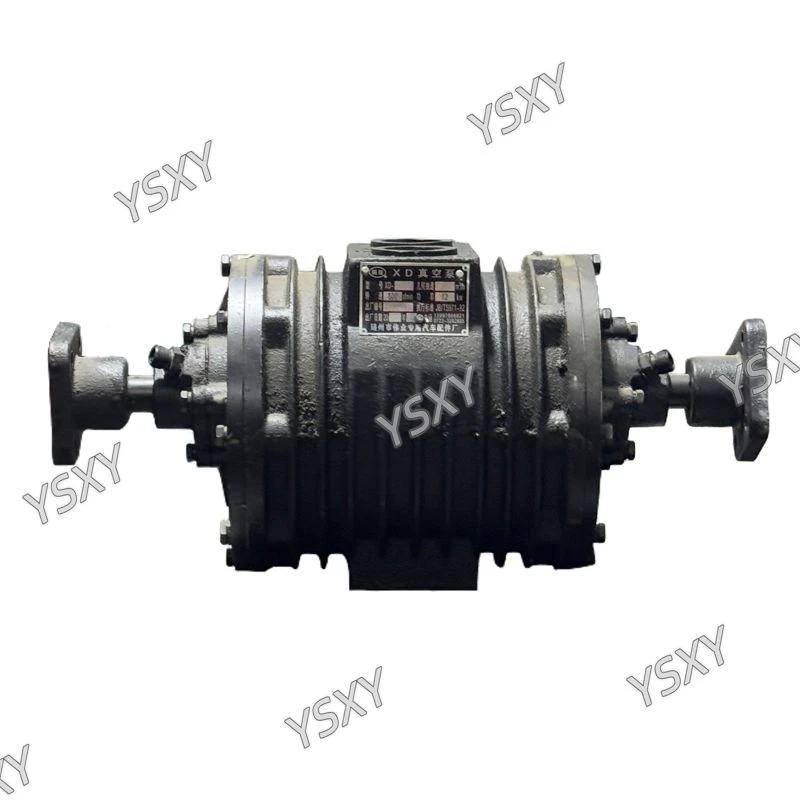
![Vacuum Pump]() Vacuum PumpPump Type: Disc rotary vacuum pump, Liquid ring vacuum pump. Displacement: 300-1200 m³/h. Ultimate Vacuum: ≤ -95 kPa. Operating Speed: 1000-3000 rpm.
Vacuum PumpPump Type: Disc rotary vacuum pump, Liquid ring vacuum pump. Displacement: 300-1200 m³/h. Ultimate Vacuum: ≤ -95 kPa. Operating Speed: 1000-3000 rpm. -
![Vacuum Pump XD-240]() Vacuum Pump XD-240Model: XD-240. Pump Type: Rotary Vane Vacuum Pump. Displacement: 240 m³/h. Ultimate Vacuum: ≤ -98 kPa.
Vacuum Pump XD-240Model: XD-240. Pump Type: Rotary Vane Vacuum Pump. Displacement: 240 m³/h. Ultimate Vacuum: ≤ -98 kPa.


Why choose us?
Careful selection and deep collaboration
Our cooperative factories are not merely suppliers but core partners who have been rigorously screened, continuously evaluated, and deeply integrated with us. We not only focus on their production capacity but also value their quality culture, technical strength, and commitment to continuous improvement. We have established a close cooperation model with core factories featuring joint research and development, collaborative production, and resource sharing.
Exclusive capacity, stable supply
Through long-term cooperation and investment, we have established a highly trusted exclusive capacity guarantee mechanism with our core partner factories. This ensures that even during market fluctuations, we can provide our customers with stable, timely, and predictable product supplies.
Advanced equipment
We deeply integrate and effectively utilize the advanced production equipment resources of these partner factories to ensure they serve our product standards and customer demands. Our core strategic partner factories are all equipped with world-leading production equipment and technologies.
Benefits of Vacuum Pump
Enhanced efficiency and performance
One of the primary benefits of utilizing vacuum pumps is the significant enhancement in efficiency and overall system performance. By removing unwanted gases or creating a vacuum environment, these pumps help reduce air resistance and friction, leading to improved energy efficiency. In various manufacturing processes, such as packaging, vacuum pumps play a crucial role in optimizing production speed while maintaining product quality.
Versatility and application range
Vacuum pumps are incredibly versatile and find applications in a wide range of industries. In manufacturing, they are used for packaging, degassing resins, and handling delicate materials like semiconductor wafers. In healthcare, vacuum pumps power medical devices, such as suction machines and blood analyzers. Even in the food processing industry, vacuum pumps are indispensable for packaging and preserving food products.

Increased product quality
Maintaining the quality and integrity of products is a top priority for many industries. Vacuum pumps play a pivotal role in ensuring product quality by removing contaminants and unwanted gases. In the food industry, for example, vacuum packaging prevents the growth of harmful microorganisms and extends the shelf life of perishable goods. In electronics manufacturing, vacuum pumps help eliminate moisture and impurities, ensuring the reliability of electronic components.
Cost savings
Cost efficiency is a key consideration for any business or operation. Vacuum pumps can lead to substantial cost savings in several ways. First and foremost, the reduction in energy consumption due to enhanced efficiency can significantly lower operational costs. Moreover, vacuum pumps often require minimal maintenance, further reducing the total cost of ownership.
Product Specifications
|
Parameter |
Value/Description |
|
Pump Type |
Disc rotary vacuum pump, Liquid ring vacuum pump |
|
Displacement |
300-1200 m³/h |
|
Ultimate Vacuum |
≤ -95 kPa |
|
Operating Speed |
1000-3000 rpm |
|
Drive Type |
Belt drive, Direct drive |
|
Shaft Power |
15-75 kW |
|
Material Construction |
Cast iron pump body, stainless steel parts |
|
Ealing System |
Mechanical seal, Oil seal |
|
Lubrication |
Forced lubrication, Oil bath lubrication |
|
Protection Level |
IP55, Corrosion-resistant |
Application of Vacuum Pump
Role in drug manufacturing
The pharmaceutical industry relies heavily on vacuum pumps for the production of drugs, particularly in processes like filtration, drying, and sterilization. These pumps ensure that active pharmaceutical ingredients (APIs) are produced in a contamination-free environment.
Applications in sterilization and drying
Vacuum pumps are used in freeze-drying (lyophilization), which is a critical process for preserving biological materials and pharmaceuticals. They also play a key role in sterilization processes, ensuring that equipment and materials are free from microbial contamination.
Use in packaging and preservation
Vacuum pumps are integral to the packaging and preservation of food products. By removing air from packaging, these pumps extend the shelf life of perishable goods, helping to prevent spoilage and maintain quality.
Role in freeze drying
Freeze drying is another application where vacuum pumps are essential. This process involves freezing the food and then reducing the surrounding pressure to allow the frozen water in the food to sublimate directly from solid to gas, preserving the food's texture, flavor, and nutritional value.
Role in extraction and refining
In the oil and gas industry, vacuum pumps are used during the extraction and refining processes. They help in creating the necessary conditions for the safe and efficient extraction of crude oil and natural gas from reservoirs.
Applications in gas transport
Vacuum pumps are also used in the transportation of natural gas through pipelines. They help in reducing the density of the gas, making it easier and more efficient to transport over long distances.
Use in brake systems
Vacuum pumps are a critical component in automotive brake systems, particularly in vehicles with diesel engines where they help create the vacuum necessary for brake boosters to function effectively.
Applications in engine testing
In engine testing, vacuum pumps help simulate various atmospheric conditions, allowing engineers to evaluate engine performance under different pressures and temperatures.
Role in aircraft component testing
In aerospace, vacuum pumps are used in testing aircraft components, such as fuel systems and hydraulic systems, to ensure they can withstand the rigors of high-altitude flight.
Use in space simulation chambers
Vacuum pumps are also employed in space simulation chambers, where they recreate the vacuum conditions of outer space to test satellites, spacecraft, and other equipment before launch.
Role in semiconductor manufacturing
The electronics industry, particularly in semiconductor manufacturing, relies on vacuum pumps for processes like thin-film deposition, etching, and lithography. These processes require extremely clean and controlled environments to produce high-quality electronic components.
Applications in coating and etching
Vacuum pumps are used in the coating and etching processes to ensure that materials are deposited uniformly and accurately onto electronic components, which is essential for the performance of devices like microchips and integrated circuits.
Packaging and Shipping


FAQ
We are one of the most professional sewage truck parts manufacturers and suppliers in China, providing high quality customized products with low price. We warmly welcome you to wholesale cheap sewage truck parts made in China here from our factory.
Popular Products


